Why Pyramid Flakes?
Not all salt is created equal. How a crystal forms, its structure, density, and surface area, shapes how it behaves the moment it touches food. Pyramid flake sea salt is the reason a simple plate of tomatoes, a soft-boiled egg, or a square of dark chocolate can suddenly taste next level. Here is what makes the pyramid flake special, how it's made, and exactly how to use it so every pinch counts.
What is a pyramid flake?
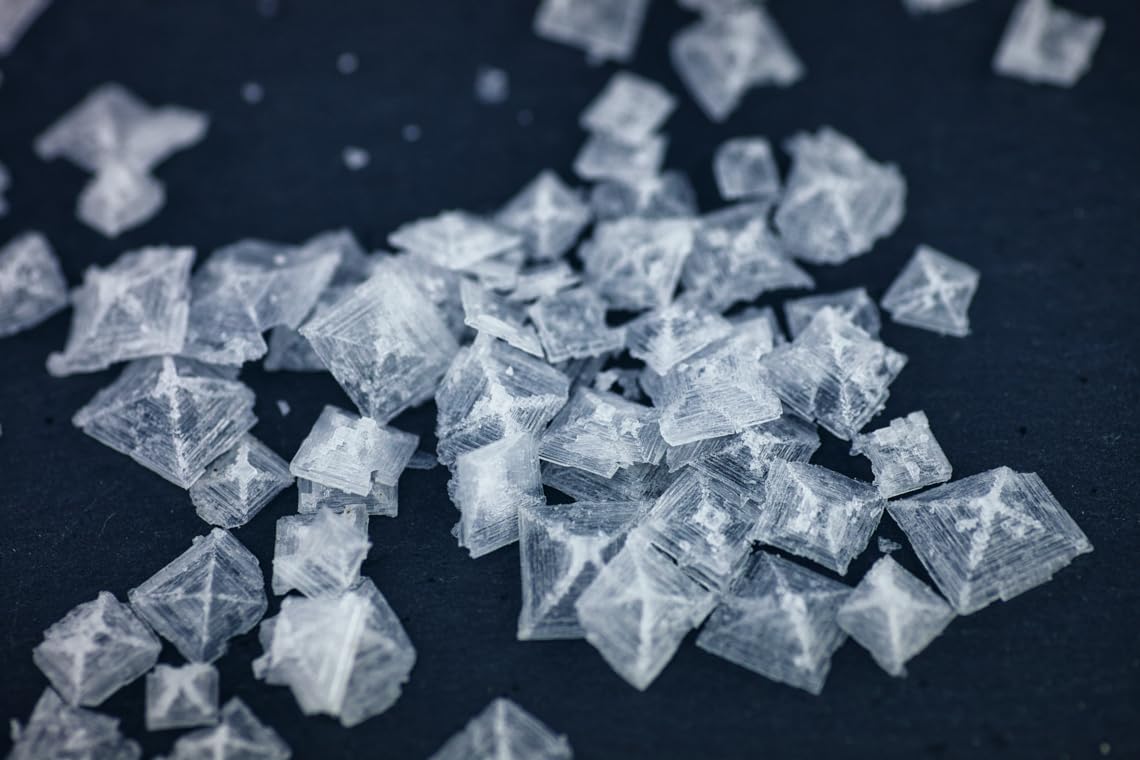
A pyramid flake is a hollow, four-sided salt crystal that forms at the surface of concentrated sea brine under slow, carefully controlled evaporation. Instead of the dense cube you get from ordinary table or kosher salt, the crystal grows outward and upward into a tiny hollow pyramid with thin, brittle walls.
That shape is the whole point. Compared with denser cubic crystals or mechanically crushed rock salt, a true pyramid flake has:
- thin crystal walls
- tiny trapped pockets of air
- very low weight for its size
The result is a crystal that is delicate, visually striking, and purpose-built for the final flourish on a dish rather than the pot on the stove.
How our flakes are made
Our flake sea salt is hand-harvested from the cold, clean waters of the Canadian Pacific off Vancouver Island. The brine is concentrated slowly, and as it reaches saturation, flakes form and grow at the surface. They are lifted by hand, which preserves the fragile pyramid structure that mass-produced salt cannot keep. Read more in What Makes Vancouver Island Sea Salt Special.
Pyramid flake vs other salts
A quick way to see where flake salt fits in your kitchen:
| Salt type | Crystal shape | Best use | Dissolves |
|---|---|---|---|
| Table salt | Tiny dense cube | Baking by weight, general seasoning | Very fast |
| Kosher salt | Larger dense cube | Seasoning while cooking, curing | Fast |
| Fine sea salt | Small irregular grain | Everyday cooking, brining, baking | Fast |
| Fleur de sel | Moist fine crystal | Delicate finishing | Slow |
| Pyramid flake | Hollow pyramid | Finishing, texture, crunch | Slow, in stages |
If you want an everyday, dissolve-in-the-pot salt, our Fine Sea Salt is the workhorse. Pyramid flake is the finishing touch you add at the very end.
The texture and taste experience
Bite into a pyramid flake and it collapses rather than crunches. The thin walls shatter into fine fragments that coat the tongue evenly, delivering a bold, clean hit of salinity with less salt overall. There is no harsh, metallic bite. The seasoning reads as clear and balanced, which is exactly what you want when the salt is meant to highlight a dish, not bury it.
Because the crystals are light and high in surface area, they:
- sit gracefully on top of food without sinking
- dissolve slowly and evenly
- release flavour in stages for a layered taste
How to use pyramid flake salt
Use it at the very end, to highlight rather than mask a dish. A small, deliberate pinch is all you need. Pyramid flakes are especially good on:
- grilled or roasted meats
- fresh vegetables and salads
- fried or soft-boiled eggs
- warm bread with good butter
- ripe tomatoes and avocado
- chocolate, caramel, and cookies
For everyday reaching, the Flake Sea Salt box lives happily by the stove. Cooks who go through more reach for the Chef's Bucket. To explore, try Maple Smoked Flake Salt or Kelp Sea Salt Flakes, or taste the range with the True North Collection.
One thing to avoid
Pyramid flakes are fragile by design and not meant for cooking in water or prolonged heat. Dropped into a boiling pot, the structure dissolves and you lose what makes it special. Season your cooking with our fine sea salt, and save the flakes for the finish.
The perfect finishing touch
A pinch of hand-harvested pyramid flake, added at the last second, turns a simple sprinkle into a deliberate finish. Explore our flake sea salts and find your pinch.
Frequently asked questions
What is a finishing salt?
A finishing salt is a salt added at the very end of cooking or at the table, for flavour and texture rather than to season during cooking. Pyramid flake salt is ideal because of its delicate crunch and clean taste.
Are all flake sea salts the same?
No. A true pyramid flake is a hollow, hand-harvested crystal, and that fragile structure is what gives the delicate crunch and clean taste. Mass-produced or mechanically milled flakes lose that shape, which is why hand-harvested flakes like ours behave so differently on the plate.
Can you cook with flake sea salt?
You can, but you usually shouldn't. Flake salt dissolves quickly and loses its signature texture under heat or in liquid, so it is best saved for finishing. Use our fine sea salt for everyday cooking.
What is the difference between flake salt and kosher salt?
Kosher salt is a dense cubic crystal made for seasoning while you cook. Flake salt is a light, hollow pyramid crystal made for finishing. They are not interchangeable by volume, since flake salt is far less dense.
How is flake sea salt made?
It forms as thin crystals at the surface of slowly evaporating sea brine, then is lifted by hand. The gentle process is what preserves the fragile pyramid shape.
How much flake salt should I use?
A small pinch, crushed lightly between your fingers over the finished dish. Because the flakes are light and dissolve on the tongue, a little delivers a lot of flavour.


Written by Scott Gibson